Manufacturing has always been an important part of the Miami Valley’s identity.
Today, it remains one of the region’s greatest strengths. Approximately 16% of the local workforce is employed in manufacturing, making it one of the most significant drivers of our economy. From aerospace and defense to precision machining, food production, advanced materials and industrial technologies, manufacturers continue to shape the future of the Dayton region.
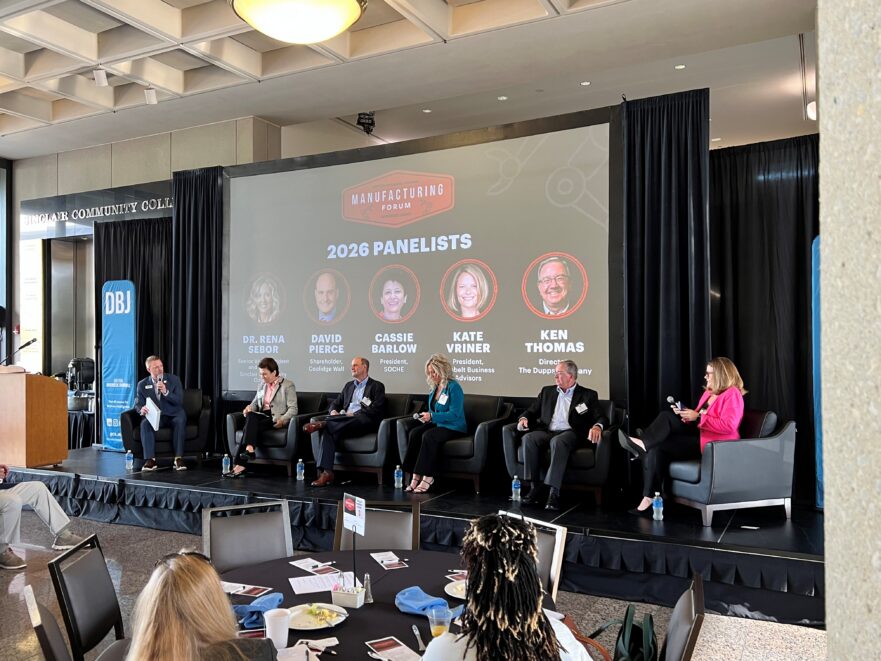
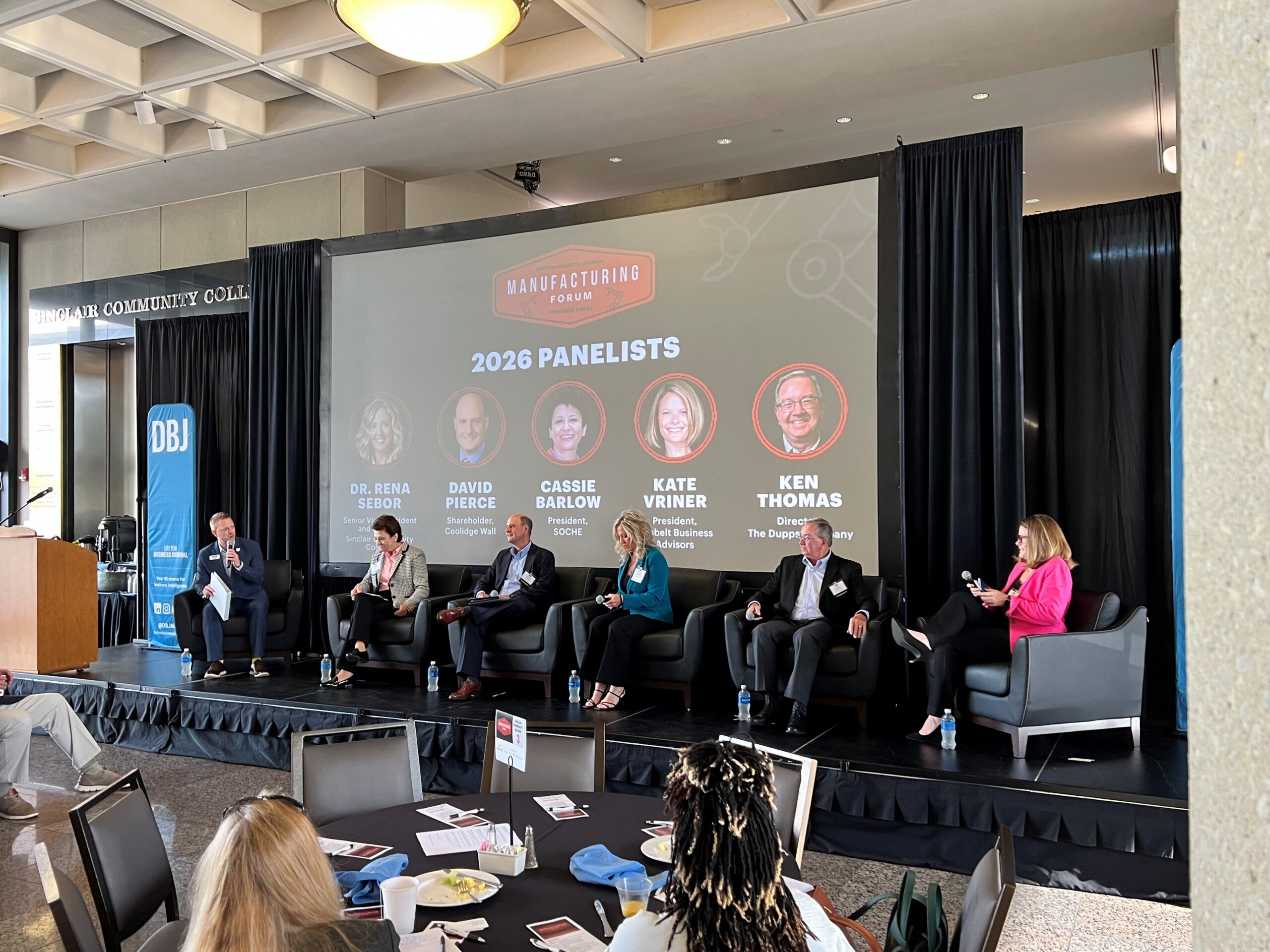
That future of was the focus of discussion at Sinclair Community College’s Manufacturing Forum on June 11, a dynamic gathering designed to inform, connect and inspire the region’s manufacturing community. The event brought together experts from across disciplines to discuss the trends, opportunities and challenges reshaping the industry:
- Workforce Development and Talent
- Legal, Regulatory and Risk Management
- Employer Internships and Talent Pipelines
- Business Transition Strategy
- Manufacturer Perspectives
- Artificial Intelligence and Supply Chain Transformation
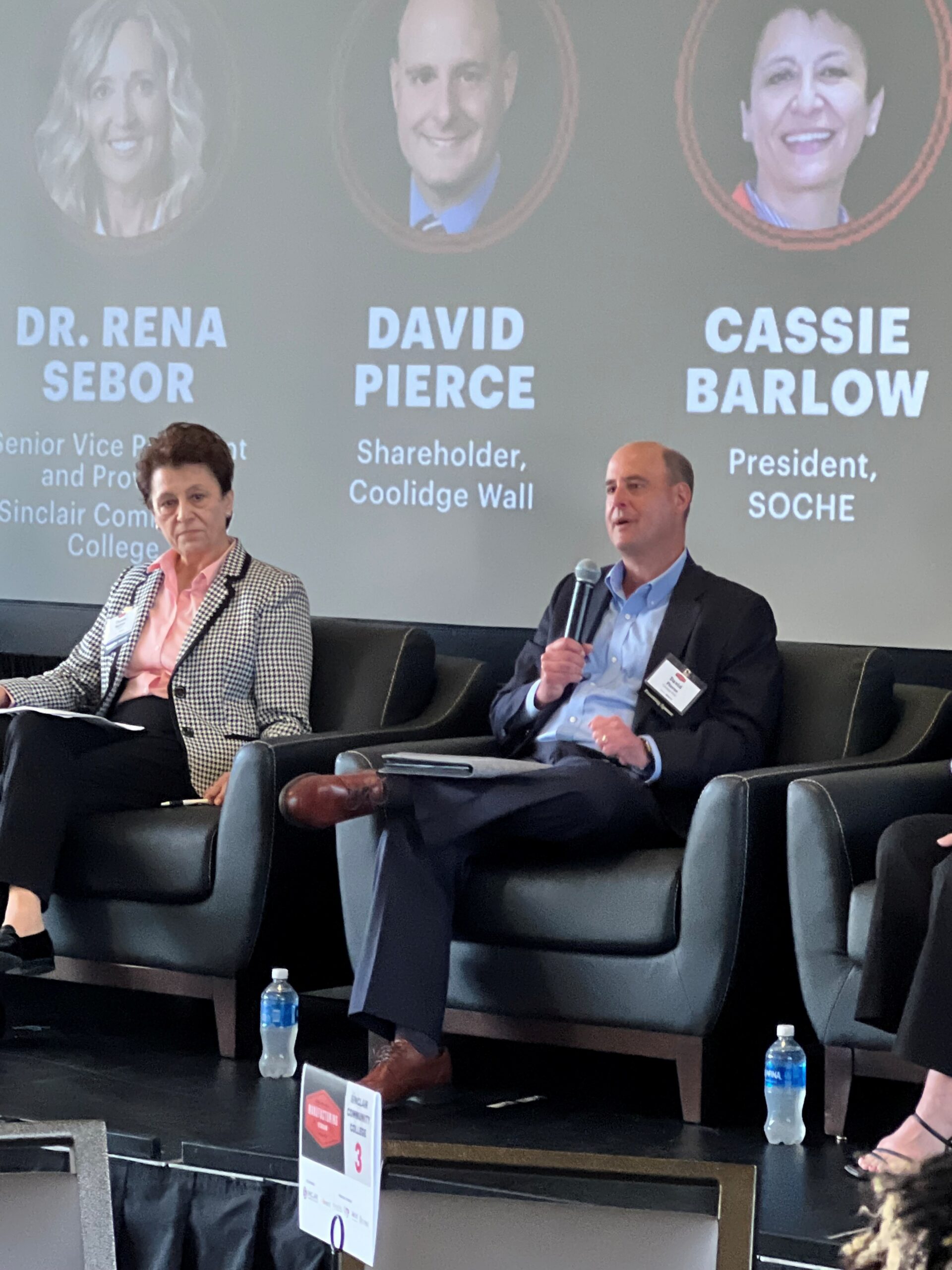 Representing Coolidge Wall was shareholder David Pierce, who served as the forum’s legal and regulatory panelist. With more than three decades of experience, Pierce chairs Coolidge Wall’s Litigation and Labor & Employment Departments and serves on the firm’s Executive Committee. He is certified as a Specialist in Labor and Employment Law by the Ohio State Bar Association and has been recognized repeatedly by Best Lawyers in America®, Ohio Super Lawyers, and most recently as Dayton’s 2026 Best Lawyers “Lawyer of the Year” in Litigation – Labor and Employment. He has spent his career helping businesses navigate disputes before they escalate and guiding organizations through complex legal decisions.
His message to manufacturers was straightforward: An ounce of prevention is worth a pound of cure. For business leaders, that means building legal strategy into business strategy from the very beginning.
Building With the End in Mind
The late Clay Mathile, the visionary entrepreneur who transformed Iams into a global company and became one of Dayton’s most respected business leaders, often encouraged leaders to “start your business with the end in mind.”
That philosophy extends well beyond succession planning. Do you have a strategic growth plan? Do you also have a workforce plan? A cybersecurity plan? A contract management strategy? A response plan when disruption inevitably occurs?
As Pierce emphasized during the forum, legal counsel should not simply be called when something goes wrong. Experienced attorneys help organizations anticipate challenges before they become costly problems. The strongest businesses out there build with the future in mind.
The Risks Are Changing Faster Than Ever
Nearly every speaker at the forum touched on one reality: the pace of change is accelerating.
Artificial intelligence is transforming operations. Supply chains continue to evolve. Global events reshape markets overnight. Technology creates efficiencies while introducing entirely new exposures.
For the first time in history, five generations are working side by side in the workforce. That diversity creates tremendous opportunities for innovation, mentorship and knowledge transfer. It also presents new employment considerations involving communication styles, workplace expectations, accommodations, training and conflict resolution. The future may be bright, but it requires intentional leadership.
Sinclair President Dr. Steven Johnson captured the spirit of the day when he observed that the Dayton region is “big enough to have everything we need and small enough to break down silos,” concluding that the future of manufacturing in our community remains strong.
 AI: Opportunity and Responsibility
Artificial intelligence emerged as one of the forum’s dominant themes. Manufacturers are already using AI to improve forecasting, optimize production schedules, monitor quality, enhance supply chains, and identify efficiencies. But innovation without governance creates risk. Pierce noted that organizations must begin asking critical questions:
- Who owns AI-generated outputs?
- Who has access to the data?
- What happens to proprietary information entered into AI platforms?
- How do companies address bias in automated decision-making?
- What safeguards exist around confidentiality and cybersecurity?
- How are employees trained to use these tools appropriately?
The technology is moving rapidly and policies, contracts and governance structures must evolve just as quickly.
Contracts Matter More Than Ever
Disruption is no longer the exception. It is the expectation. COVID-19 reminded businesses of the importance of force majeure provisions. Tariffs and market volatility highlight the need for pricing protections and allocation clauses. Supply chain interruptions underscore the importance of dispute resolution mechanisms and clearly defined responsibilities.
Strong contracts help organizations anticipate the unexpected.
Experienced counsel can identify blind spots that businesses often overlook, including:
- Indemnification provisions
- Warranty language
- Limitation of liability clauses
- Intellectual property protections
- Trade secret safeguards
- Confidentiality obligations
- Data privacy provisions
- Employment agreements
- Noncompetition and nonsolicitation restrictions
- Vendor and supplier agreements
- Dispute resolution procedures
- Succession and ownership transition planning
These provisions may never become headlines. But when challenges arise, they often determine whether a company absorbs a disruption or survives it.
Looking at the Business Holistically
At Coolidge Wall, manufacturing clients benefit from legal counsel that understands the full lifecycle of a business. As Pierce shared during his comments, companies are not simply responding to lawsuits. They are expanding facilities, negotiating supplier relationships, planning ownership transitions, implementing new technologies, managing workplace issues, preparing for mergers, navigating regulatory compliance, resolving disputes and always planning for what comes next. Good legal counsel isn’t just about solving problems, it’s about helping businesses build stronger foundations, make informed decisions and positioning themselves for long-term success.
While no company can predict every disruption ahead, the organizations that thrive are often the ones that prepare before challenges arrive. As the Manufacturing Forum reminded us, the future of manufacturing in the Miami Valley is full of possibility. And the businesses best positioned to seize those opportunities are the ones thinking and planning ahead now.